Dial G for Robinson 10: Key Largo

Key Largo is several of my favourite types of movies. A John Huston picture. Plenty of nautical action. One of the fabled 28 Perfect Edward G. Robinson movies, for sure. Top five on that list. But one of my favourite types of favourite types of movies is when a bunch of people are stuck in a room waiting for some weather event to pass. Bow howdy, Key Largo has that in spades (if you’ll excuse the Bogie joke).
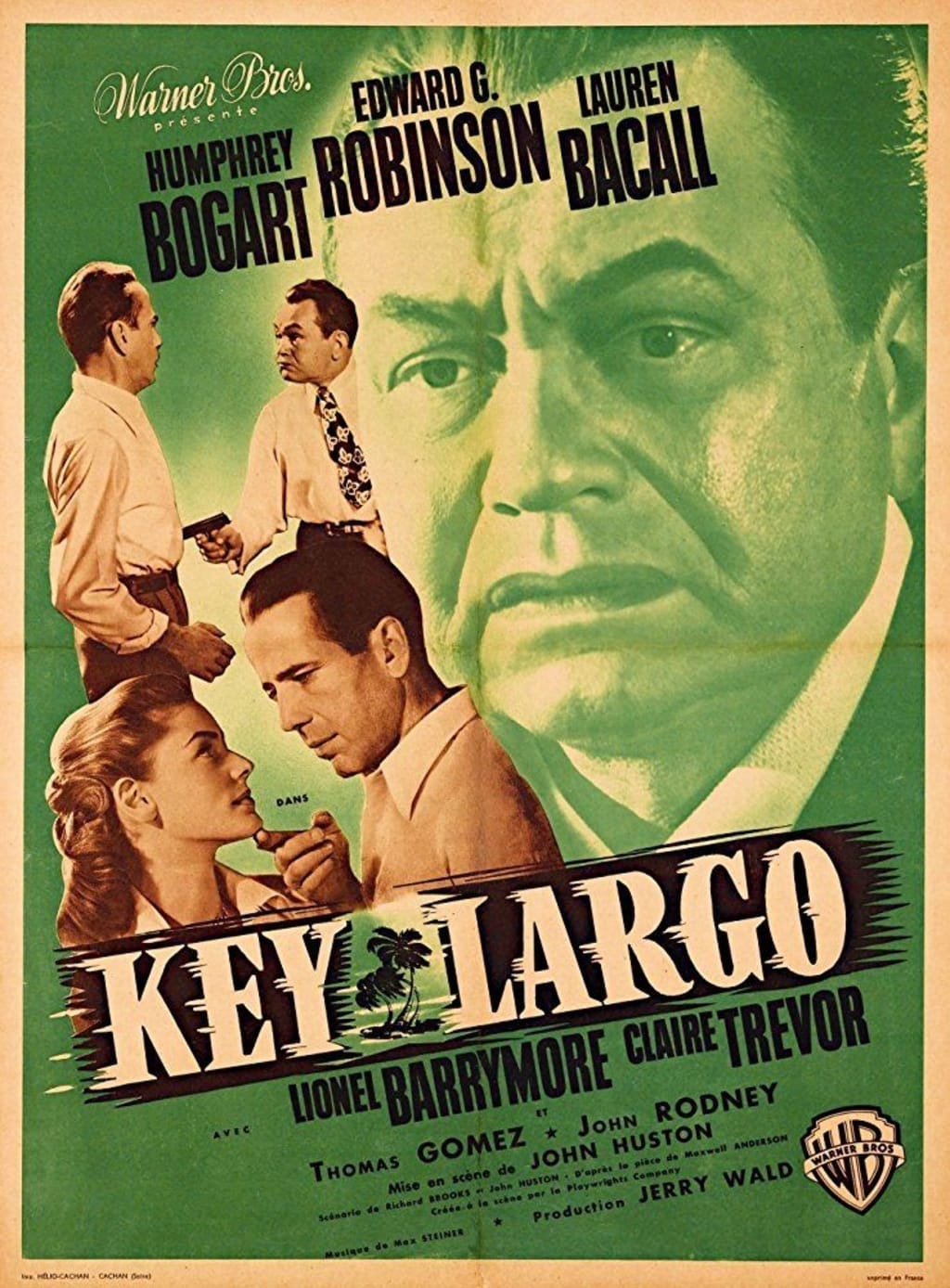
Bogart plays a drifter named Frank who shows up at a hotel on the Florida Keys just ahead of a hurricane. The cops are looking for a pair of Seminole brothers who escaped from jail. And the hotel is full of gangsters who say they're from Milwaukee. They can’t stop talking about how two years from now, prohibition will be back and things’ll be better than ever. The gangsters brought a girl along and she drinks too much.
The hotel is run by Lionel Barrymore, who you may remember as Mr. Potter in It’s a Wonderful Life and Lauren Bacall (from the Clash song). Turns they are, respectively, the father and the widow of Bogie’s war buddy who didn’t make it home.
Finally we meet, in an incredible scene where he gets out of the bath (cinematographer Karl Freud also shot Fritz Lang’s Metropolis and Tod Browning’s Dracula), Edward G. Robinson as Johnny Rocco, boss of the gang, secretly returned from exile.
Mother of mercy, is Rocco the resurrection of Rico? Like EGR’s iconic Little Caesar role, Rocco is a short tempered, rod-packing gangster who knows what he wants: MORE.
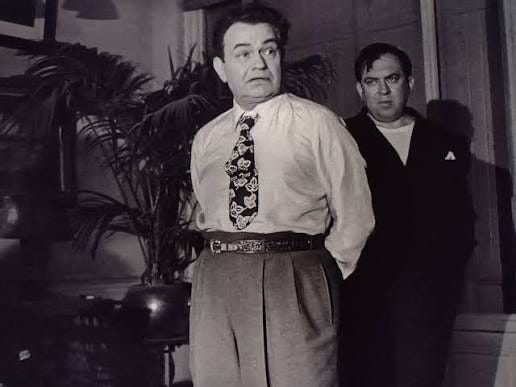
It’s a real pleasure of this stupid project I’ve made for myself to see this come full circle, to see Robinson deliver a mature performance of one of his most elemental roles.
Huston and co-screenwriter Richard Brooks adapted Key Largo from a play by conservative writer Maxwell Anderson (All Quiet On the Western Front, The Bad Seed). In the play, Frank was a cowardly deserter of the Spanish Civil War who ultimately redeems himself through heroism against a band of Mexican bandits. In the film, Frank is more pragmatic than cowardly, looking out for number one until compelled to take a principled stand. Instead of Mexican bandits, the good people of Hotel Largo are menaced by good old American gangsters. Huston and Brooks were reacting to the Red Scare and HUAC, showing the value of the individual standing up to the mob, in this case represented by the Mob.
Barrymore says, “We rid ourselves of your kind once and for all! You ain’t coming back!”
Rocco replies, “Who’s gonna stop me, old man?”
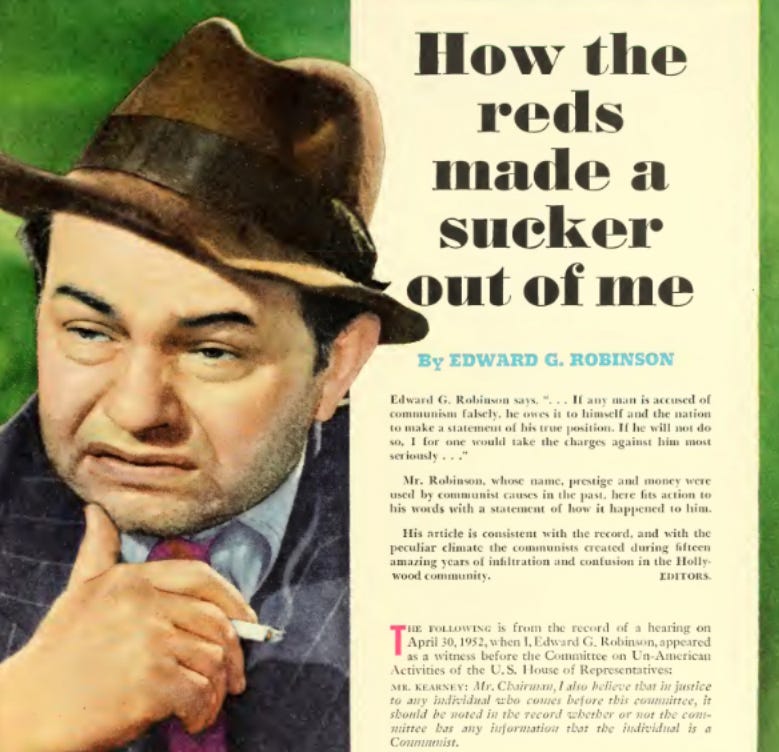
In 1947, the year Key Largo was shot, Huston had founded the Committee for the First Amendment to stand up to the oppressive McCarthyism. Bogart signed on as a public face of the campaign (as did Robinson) but later recanted his opposition to HUAC, even writing an op-ed for Playboy titled, “I’m No Communist.”
Huston, of course, moved to Ireland as a result of the moral rot of the McCarthy era. Robinson, who refused to name names and had a long history of backing anti-fascist and anti-Nazi causes (which naturally often gave him shared cause with Communists), had a tough go in pictures after that. He was Graylisted, banished to B-movies and the stage until Cecil B. DeMille hired him for 1956’s The Ten Commandments.
Key Largo’s climax, a shootout at sea, though thrilling, is more of an epilogue as the real action takes place in the hotel am during the storm.